In the ever-evolving realm of logistics, effective Warehouse Storage Systems are crucial for space maximization. According to Jane Smith, a leading expert in warehouse management, "Efficient storage solutions can dramatically transform warehouse productivity." Her insights underscore the significance of utilizing advanced storage systems to enhance operational efficiency.
The right Warehouse Storage Systems can help businesses optimize their space. It’s about finding innovative ways to utilize vertical space and streamline accessibility. Smart racking systems and dynamic shelving can make a substantial difference. However, companies often overlook the potential of their existing footprint. This can lead to unnecessary expenses and reduced efficiency.
Investing in the appropriate Warehouse Storage Systems can save both time and money. Still, not all systems are suited for every operation. Companies must continuously assess their storage needs to avoid pitfalls. Adapting to changes and integrating modern solutions is essential. The journey towards maximizing space efficiency is ongoing and requires careful planning.
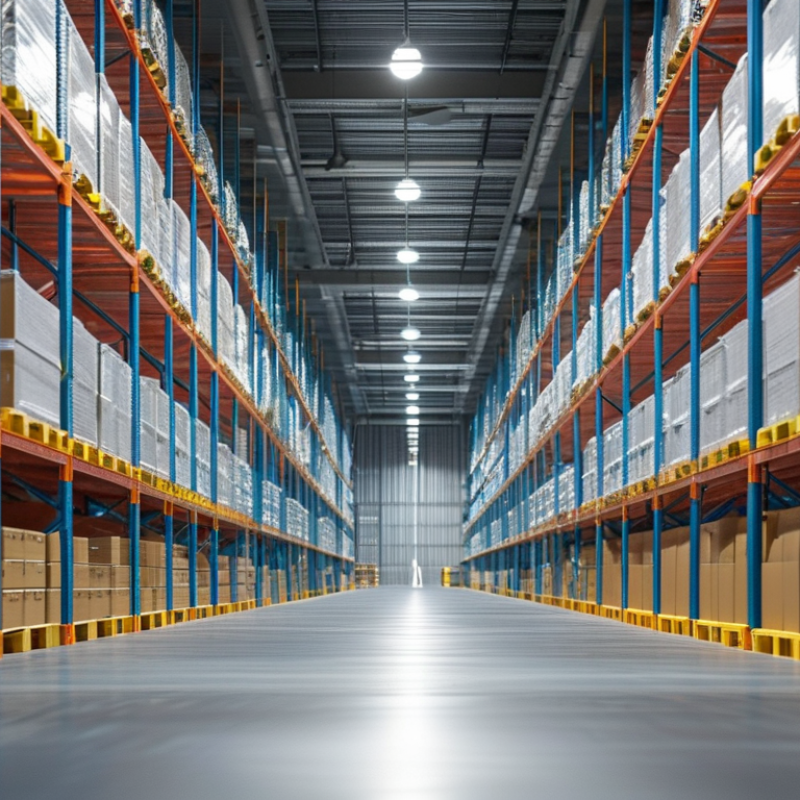
Efficient warehouse storage systems are crucial for optimizing space. The right solutions can increase storage capacity by up to 30%. Studies indicate that utilizing vertical space can lead to significant benefits. Installing high-rise shelving units maximizes height and conserves floor area. This method is beneficial for warehouses with limited ground space.
Another effective solution is the use of pallet racking systems. These can improve access speed and inventory management. Research shows that proper racking can enhance picking efficiency by 25%. However, many facilities overlook the balance between accessibility and compactness. Poorly planned layouts can hinder movement and decrease productivity.
Implementing automated systems like AS/RS (Automated Storage and Retrieval Systems) can also drive efficiency. Such systems often reduce labor costs and errors. Data reveals they can shrink retrieval times by 50%. Despite these advantages, initial costs may be a hurdle for smaller operations. Thus, evaluating long-term benefits against upfront investments is essential. Effective space optimization requires ongoing assessment and adaptability to changing business needs.
Efficient warehouse storage solutions play a crucial role in maximizing space and improving workflow. According to the Warehousing Efficiency Report 2022, organizations can increase their space utilization by up to 30% with proper systems. A well-designed storage layout minimizes the wasted space while allowing for seamless movement of goods.
However, achieving optimal space efficiency requires continuous assessment. Many warehouses struggle to adapt to changing inventory levels and product sizes. A study from the National Institute of Standards and Technology found that approximately 25% of warehouse operations are hampered by ineffective layouts. This highlights the necessity for periodic evaluations of storage systems.
Innovative solutions like vertical storage systems can significantly enhance space utilization. By increasing vertical space, warehouses can reduce their footprint while maintaining operational efficiency. The same report indicates that implementing vertical systems can lead to a 40% decrease in floor space requirements. Yet, improper implementation may lead to new complications and inefficiencies. It's essential to balance innovative solutions with practical assessments for sustained improvement.
When considering warehouse storage systems, racking systems stand out as crucial components. These systems come in various styles, each with its unique advantages and drawbacks. Selective racking is one of the most commonly used types. It offers direct access to individual pallets, making inventory management simpler. However, this system can lead to wasted space, especially in facilities with limited vertical height.
On the other hand, drive-in racking maximizes space by allowing for higher density storage. This system uses fewer aisles, ensuring that more goods can be stored in a smaller area. According to a 2022 report from the Warehousing Efficiency Council, drive-in systems can increase storage capacity by up to 60%. Yet, this efficient design can complicate inventory retrieval. Workers may find it challenging to access specific items quickly.
Meanwhile, push-back racking provides a mix of efficiency and accessibility. This system allows for multiple pallets deep storage while maintaining access to the front pallets. While versatile, it can be costly to implement. Many businesses face dilemmas when optimizing their space. Balancing cost, efficiency, and ease of access often requires careful evaluation and reflection. Ultimately, the right choice depends on specific inventory needs and facility characteristics.
Warehouse space efficiency is critical for operational success. Key metrics, such as utilization ratios, help assess how effectively space is used. A good utilization ratio indicates that a warehouse is maximizing its potential. However, many warehouses struggle with this metric. Poor layout, inadequate shelving, and unoptimized workflows can lead to wasted space and lost productivity.
Analyzing space efficiency requires data. Understanding storage density is vital. This metric examines the volume of goods stored relative to the warehouse's total capacity. Low density may indicate excess aisles or inefficient shelving. Addressing these issues can significantly enhance storage space. Regular audits can reveal underperforming areas. You must identify what is working and what is not.
Consider also the flow of goods. Disorganized layouts hinder efficiency. Observing how items move in and out can provide insights. Are there bottlenecks? Do workers spend too much time retrieving items? These reflections are crucial. Focusing on these details helps fine-tune your approach. After all, even the best systems require constant adaptation to remain effective.
Emerging technologies are transforming warehouse storage systems. Artificial Intelligence (AI) plays a key role in enhancing space efficiency. A recent report by McKinsey highlighted that AI could improve warehouse operations by up to 20%. Efficient inventory management is one aspect where AI excels. It analyzes data to predict demand, optimizing storage space accordingly.
Automation is another cornerstone. Automated guided vehicles (AGVs) reduce the time spent on manual tasks. According to a study by the Logistics Management Institute, warehouses using automation reported a 30% increase in productivity. However, this transition is not without challenges. Many organizations struggle with workforce adaptation to new technologies. Training and change management must align with these advancements.
The integration of AI and automation is complex. Not all warehouses can quickly implement new systems. A Deloitte survey indicated that 58% of supply chain professionals cite budget constraints as a major hurdle. Moreover, data security risks may arise from increased connectivity. Balancing technology adoption with operational risks is crucial for maximizing space efficiency in warehousing.
: They maximize space and improve workflow in warehouses. Proper systems can increase space utilization by up to 30%.
It helps adapt to changing inventory levels and product sizes. About 25% of operations suffer from ineffective layouts.
They enhance space utilization by using vertical space. This can lead to a 40% decrease in floor space needs.
It's a common type of racking system. It offers direct access to pallets but can waste space in low-height areas.
It allows higher density storage with fewer aisles. This can increase storage capacity by up to 60%.
It complicates inventory retrieval. Workers may struggle to access specific items quickly in such systems.
It provides a mix of efficiency and accessibility. Multiple pallets can be stored while keeping access to the front pallets.
The implementation of this system can be expensive. Balancing cost, efficiency, and access requires careful evaluation.
The decision should reflect specific inventory needs and facility characteristics. Reflection on costs and usability is essential.
It may lead to new complications and inefficiencies. Balance between innovation and practical assessments is crucial.
Efficient warehouse storage systems play a crucial role in maximizing space utilization, directly impacting operational productivity and cost-effectiveness. Understanding the importance of these solutions involves analyzing various types of racking systems, each with its own set of advantages and disadvantages that cater to different warehousing needs. Utilizing key metrics such as utilization ratios helps in assessing warehouse space efficiency, enabling managers to make informed decisions that optimize storage layouts.
Additionally, emerging technologies like artificial intelligence and automation are reshaping warehouse storage systems, allowing for enhanced accuracy and speed in inventory management. As the landscape of warehousing evolves, integrating these advanced solutions can significantly improve space efficiency, making it essential for businesses to stay updated on the latest trends and technologies in warehouse management.
DeltaStorage