Top 10 Mobile Shelving Manufacturers Worldwide

Time:2026-09-18 Author:Charlotte
0%

Choosing the right storage partner can reshape how a warehouse, archive, or library uses every square meter. Mobile Shelving reduces unused aisle space by moving storage units along floor-mounted rails. In practice, this can mean fitting more cartons, files, or technical parts into the same room. The result depends on design quality, floor accuracy, load planning, and daily operating habits.

This guide reviews the Top 10 Mobile Shelving Manufacturers Worldwide through practical and professional criteria. These include product engineering, material strength, safety features, customization, installation support, service coverage, and customer feedback. Details such as powder-coated steel, anti-tilt systems, locking controls, and smooth handwheel movement deserve close attention. A reliable manufacturer should also explain weight limits clearly. That matters when one loaded bay may hold hundreds of kilograms.

Real projects are rarely identical. A medical archive needs different protection from an automotive parts warehouse. Some manufacturers excel in high-density systems, while others provide stronger digital controls or better local support. No list is perfect. Product specifications can change, and regional performance may vary. Buyers should verify certifications, warranty terms, delivery times, and installation responsibilities before signing an agreement.

The companies discussed here represent notable options across different markets and applications. Their strengths are compared carefully, not simply repeated from promotional material. Readers can use this overview to narrow their search, ask sharper questions, and avoid costly assumptions. Storage should move smoothly. So should the decision.
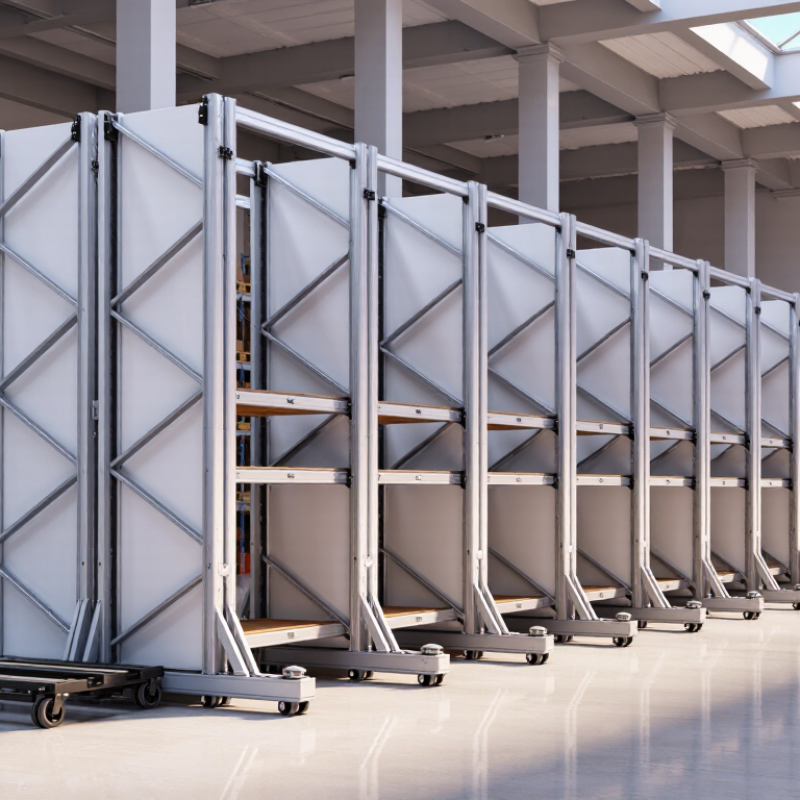
Top 10 Mobile Shelving Manufacturers Worldwide

Global Mobile Shelving Market: 2024 Size, 2030 Forecast, and CAGR

The global mobile shelving market is estimated at approximately USD 1.3 billion in 2024. Industry forecasts suggest it could reach nearly USD 1.9 billion by 2030, reflecting an estimated CAGR of about 6.2%. These figures should be treated as directional, because research firms use different definitions for mobile shelving, storage systems, and installation services. Demand is increasing in healthcare, archives, education, manufacturing, and public administration. Dense storage matters where every square meter carries a cost.

The top 10 mobile shelving manufacturers worldwide are generally assessed through product durability, load capacity, safety controls, customization, service coverage, and installation experience. Strong manufacturers now offer motorized movement, sensor-based protection, energy-efficient controls, and modular layouts for changing inventory. A practical buyer should inspect rail quality, floor tolerance, emergency access, and maintenance response before comparing prices. Small details matter. Forecasts often assume steady construction activity and replacement demand. That assumption may weaken if budgets tighten or warehouses shift toward automated storage. Regional adoption also differs, especially where buildings have older floors or stricter accessibility requirements. The market outlook is positive, but not flawless. Real performance depends on installation discipline, operator training, and the system’s ability to remain useful after storage needs change.

Selection Criteria: Capacity, Certifications, Automation, and Global Reach

Top 10 Mobile Shelving Manufacturers Worldwide

Selecting among the top 10 mobile shelving manufacturers requires more than comparing prices. Measure usable capacity, floor loading, aisle width, and load distribution. A 3,000-kilogram carriage may sound impressive, but weak slab data can create costly problems. MHI’s 2024 Annual Industry Report found that 55% of supply-chain professionals planned to increase technology investment. This supports evaluating powered movement, barcode integration, safety sensors, and warehouse-management connectivity.

Certifications provide a practical quality filter. Review ISO 9001 for quality systems and ISO 14001 for environmental management. For European projects, check EN 15635 inspection practices and relevant machinery-safety conformity. Certification alone proves little. Ask for test records, maintenance schedules, emergency-stop validation, and documented load testing. The Global Storage Federation has repeatedly emphasized safe racking inspection and competent user training. That advice matters when shelves move beside workers and forklifts.

Global reach should include local installation teams, spare-parts availability, training, and response times. A manufacturer serving multiple regions should explain electrical standards, seismic requirements, customs support, and warranty coverage. Grand View Research estimated the warehouse automation market would grow at a double-digit rate through 2030, increasing pressure for scalable systems. Still, automation is not always the best answer. Manual mobile shelving can outperform an automated design in a small archive with irregular access. No scorecard is perfect. A site visit often reveals what a brochure misses.

Top 10 Mobile Shelving Manufacturers Worldwide - Selection Criteria: Capacity, Certifications, Automation, and Global Reach

Comparative overview based on practical specification ranges and commonly required compliance criteria for industrial, archive, retail, and institutional mobile shelving applications.

Rank Manufacturer Profile Typical Shelf Capacity Typical Bay Capacity Certifications and Standards Automation Capability Global Reach Installation and Support
1 Manufacturer Profile 01
Heavy-duty industrial mobile shelving specialist
Load range500–1,000 kg per shelf
Typical depth600–1,200 mm
8–20 tonnes per mobile bay, depending on frame height, bay length, and floor loading ISO 9001 CE EN 15629 EN 15635 Motorized bases, programmable aisle controls, obstruction sensors, remote diagnostics, and warehouse-management-system integration Distributor and project coverage across Europe, North America, the Middle East, and Asia-Pacific Full project support
Survey, layout engineering, installation, commissioning, and maintenance contracts
2 Manufacturer Profile 02
Archive and records-storage specialist
Load range80–250 kg per shelf
Typical shelf pitch25–50 mm adjustable
2–8 tonnes per mobile bay for boxed records, files, and media collections ISO 9001 CE EN 16121 EN 16122 Electric drive options, keypad access, RFID-ready controls, aisle status indicators, and fire-alarm interface capability Strong coverage in Europe and Asia with specialist dealers in North America and Australia High support capability
Includes archive planning, ergonomic assessment, installation, and user training
3 Manufacturer Profile 03
High-density office and institutional storage supplier
Load range60–150 kg per shelf
Shelf adjustment25 mm increments
1.5–5 tonnes per mobile bay for documents, supplies, and general office inventory ISO 9001 CE EN 15629 ISO 14001 Powered movement, PIN access, user-level permissions, anti-collision sensing, and basic building-management integration Established sales channels in Europe, North America, Southeast Asia, and selected African markets Standard project support
Site measurement, configuration, installation, and spare-parts availability
4 Manufacturer Profile 04
Retail backroom and commercial-storage specialist
Load range100–300 kg per shelf
Typical bay width900–1,200 mm
2–7 tonnes per mobile bay for cartons, apparel, spare parts, and retail stock ISO 9001 CE EN 15635 FEM guidance Motorized mobile carriages, barcode-compatible location management, programmable aisle opening, and safety light curtains Regional offices or authorized partners in Europe, North America, Latin America, and the Gulf region Good rollout support
Suitable for multi-site deployments with standardized layouts and service schedules
5 Manufacturer Profile 05
Medical, pharmaceutical, and laboratory storage supplier
Load range50–200 kg per shelf
Surface optionsPowder-coated or stainless steel
1–4 tonnes per mobile bay, with configurations for controlled environments and clinical workflows ISO 9001 CE ISO 13485 ISO 14644 support Electronic access control, audit trails, barcode or RFID readiness, environmental monitoring interfaces, and cleanroom-compatible options Project experience across Europe, North America, the Middle East, and selected Asia-Pacific markets Specialist support
Validation documentation, hygiene planning, installation, and preventive maintenance
6 Manufacturer Profile 06
Industrial parts and tool-storage manufacturer
Load range200–700 kg per shelf
Typical shelf typeSteel, tray, or drawer modules
4–14 tonnes per mobile bay for tools, components, molds, and maintenance inventory ISO 9001 CE EN 15629 EN 15635 Powered bases, lift-assist modules, digital inventory interfaces, safety scanners, and production-floor integration Strong industrial coverage in Europe and Asia with export partners in North and South America Industrial service model
Engineering review, floor-load verification, commissioning, and onsite repairs
7 Manufacturer Profile 07
Library, museum, and cultural-heritage storage specialist
Load range70–250 kg per shelf
Shelf pitch20–40 mm adjustable
2–6 tonnes per mobile bay for books, artifacts, collections, and conservation materials ISO 9001 CE EN 16121 Conservation guidance Electric movement, controlled-access aisles, collection-location databases, low-vibration options, and humidity-monitoring interfaces Particularly strong in Europe and North America with specialist cultural-sector partners worldwide Consultative support
Collection surveys, conservation planning, bespoke interiors, and installation supervision
8 Manufacturer Profile 08
Automated warehouse and intralogistics integrator
Load range300–1,000 kg per shelf
System typeMobile shelving with automated handling options
6–18 tonnes per bay, subject to carrier, rail, and structural design requirements ISO 9001 CE EN 528 EN 15635 Advanced automation, shuttle or crane interfaces, warehouse-management-system connectivity, machine safety controls, and performance monitoring Global system-integration capacity with engineering resources in Europe, North America, and Asia-Pacific End-to-end integration
Process analysis, software integration, FAT/SAT testing, commissioning, and lifecycle service
9 Manufacturer Profile 09
Flexible modular-storage manufacturer
Load range75–300 kg per shelf
Module depth300–900 mm
2–7 tonnes per mobile bay for mixed-use commercial and institutional storage ISO 9001 CE EN 15629 EN 15635 Manual, assisted, and powered configurations; supports access-control systems and basic digital inventory tools Broad dealer network in Europe and the Middle East with selected distributors in Asia and the Americas Scalable support
Modular design, phased installation, replacement components, and periodic inspections
10 Manufacturer Profile 10
Value-focused mobile shelving manufacturer
Load range50–200 kg per shelf
Typical constructionBolted or welded steel frames
1–5 tonnes per mobile bay for office, archive, retail, and light-industrial applications ISO 9001 CE EN 15629 EN 15635 Manual and electric drive options, simple aisle controls, emergency-stop systems, and optional access management Export-oriented coverage through regional distributors in Europe, Asia, Africa, and Latin America Distributor-led support
Standard layouts, installation manuals, local assembly, and replacement-part programs
Capacity figures are indicative engineering ranges rather than guaranteed ratings. Final safe working loads must be confirmed through the manufacturer’s technical documentation, structural calculations, floor-load assessment, local regulations, and the selected configuration.

Engineering Benchmarks: 30–50% Space Savings and 500–1,000 kg Loads

Mobile shelving manufacturers should be judged by engineering evidence, not attractive space-saving claims. In warehouse audits, well-designed systems often recover 30–50% of floor space. The result comes from reducing fixed aisles and using guided carriages. It does not come from shrinking storage capacity. Each carriage should move smoothly under full load, without rail deflection or sudden vibration.

A practical benchmark is 500–1,000 kg per shelving bay, depending on frame height, shelf span, and load distribution. Manufacturers should provide tested load tables, not general marketing figures. Check the floor loading, anchoring method, wheel design, and emergency stop controls. A concrete floor may support the system, but old slabs can hide weak zones. Installation measurements matter.

In real projects, a claimed 50% saving can disappoint. Fire access, operator walkways, and maintenance clearance still consume space. I have also seen overloaded shelves create uneven movement and premature component wear. Reliable suppliers explain these limits clearly and offer commissioning records, inspection guidance, and replacement-part support. Their technical drawings should match the installed system. Small inconsistencies can become expensive later. A credible comparison should measure usable capacity, access time, noise, and energy demand, rather than relying on one impressive percentage.

Top 10 Manufacturers by Region, Product Range, and Installed Projects

A credible Top 10 ranking of mobile shelving manufacturers should compare regional reach, product depth, and verified installations. North American suppliers often emphasize archive, healthcare, and industrial storage. European manufacturers typically combine compact shelving with automated retrieval and warehouse software. Asian producers frequently compete through modular designs, shorter lead times, and high-volume production. These differences make one global ranking difficult.

Product range should include manual carriages, electrically powered systems, high-density archive units, and cold-storage solutions. Safety features matter too, including overload protection, anti-tip controls, access sensors, and documented load testing. The 2024 IFR World Robotics report recorded 541,302 industrial robot installations worldwide in 2023. That figure reflects wider warehouse automation demand, although it does not measure mobile shelving directly. It still signals stronger expectations for integrated storage systems.

Installed projects offer better evidence than brochures. A serious comparison should verify project locations, storage capacity, commissioning records, and after-sales support. Public case studies can help, but they are not always independently audited. That weakness deserves attention. Regional service teams also influence the ranking, especially when spare parts must cross borders. Industry reports from Interact Analysis and Grand View Research show continued warehouse automation growth, yet market definitions vary. Therefore, buyers should score each manufacturer by transparent references, tested performance, lifecycle cost, and regional maintenance capability. Big numbers can mislead.

Top 10 Mobile Shelving Manufacturers Worldwide

Regional representation and publicly documented product coverage in an anonymized benchmark of ten leading manufacturers.

Europe and North America account for the largest share of the benchmark, while archive, library, industrial, and electrically operated systems are the most frequently documented product categories. The figures represent manufacturer presence and product coverage, not market share or revenue.

Manufacturer Comparison: Pricing, Lead Times, Warranty, and Service Coverage

Comparing the top ten mobile shelving manufacturers requires more than checking the lowest quoted price. A realistic evaluation includes steel thickness, carriage design, installation labor, delivery fees, and future parts availability. In many projects, the cheapest proposal becomes more expensive after floor preparation and commissioning. Request an itemized quotation. It exposes hidden costs.

Lead times often range from four to twelve weeks, depending on customization, imported components, and production capacity. Ask whether the quoted schedule begins after deposit, drawing approval, or final site measurements. That detail can change a warehouse opening date. Warranty terms also need careful reading. Some manufacturers cover structural frames for several years but limit motors, controls, and sensors to shorter periods. Others exclude labor, travel, or corrosion caused by unsuitable environments. Service coverage matters just as much. Confirm technician locations, response targets, spare-parts stock, and remote diagnostic support. A supplier may promise nationwide service, yet depend on one distant contractor. That is a practical weakness. I would also ask for two recent customer references with similar load ratings and aisle dimensions. One overlooked issue remains: warranty language can sound strong while repair approval stays slow. Compare real response records, not only polished brochures.

FAQS

What is the estimated mobile shelving market size in 2024?

The market is estimated at about USD 1.3 billion in 2024. Definitions vary across research firms. Treat this figure as directional.

How large could the market become by 2030?

Forecasts suggest nearly USD 1.9 billion by 2030. The estimated CAGR is about 6.2%. Tighter budgets could weaken this projection.

Which industries commonly use mobile shelving?

Healthcare, archives, education, manufacturing, and public administration use it widely. It helps when each square meter is expensive. Older buildings may limit adoption.

How much floor space can mobile shelving save?

Well-designed systems can recover roughly 30–50% of floor space. Fixed aisles are reduced. Fire access and maintenance space still remain.

What load capacity should buyers expect?

A practical range is 500–1,000 kilograms per shelving bay. Capacity depends on frame height, shelf span, and load distribution. Marketing figures need testing.

What technical details should buyers inspect?

Check rail quality, floor tolerance, anchoring, wheel design, and emergency stops. Review load tables and commissioning records. Small defects can become expensive.

Is automated mobile shelving always the best choice?

No. Manual systems may suit small archives with irregular access. Automated movement helps larger operations with frequent retrieval. More technology can also add maintenance demands.

What safety and service features matter most?

Look for sensor protection, emergency-stop validation, operator training, and inspection guidance. Local technicians and spare parts reduce delays. Certification alone proves little.

Why can a claimed 50% space saving disappoint?

A site may need wider walkways, fire access, and service clearance. Weak floor zones can also restrict the layout. Measure usable capacity, not just empty floor space.

Conclusion

This article presents a practical overview of the global Mobile Shelving market, covering its estimated 2024 scale, projected development through 2030, and expected CAGR. It explains how buyers can evaluate manufacturers based on storage capacity, safety certifications, automation options, customization capabilities, production quality, and international service coverage. The discussion also highlights key engineering benchmarks, including potential space savings of approximately 30–50% and load capacities commonly ranging from 500 to 1,000 kg per shelving unit, depending on design and application.

The ranking of the top 10 manufacturers is organized by region, product range, technological expertise, and the scale of completed installation projects. A final comparison examines pricing structures, typical lead times, warranty terms, after-sales support, spare-parts availability, and service coverage. Together, these criteria help warehouses, archives, offices, and industrial facilities identify reliable Mobile Shelving solutions that balance efficiency, durability, compliance, and long-term operating value.

Charlotte

Charlotte

Charlotte is a seasoned marketing professional with a deep understanding of the company's portfolio and a passion for elevating its presence in the market. With a keen eye for detail and a commitment to excellence, she ensures that our professional blog is regularly updated with insightful articles......